

Machine-Made Rugs (Cheap and Mass Produced) vs Hand-Tufted Rugs: What Buyers Should Know

Why curling corners, slipping rugs, pet odours, and fading fibres keep happening—and which rug type actually holds up in real homes.
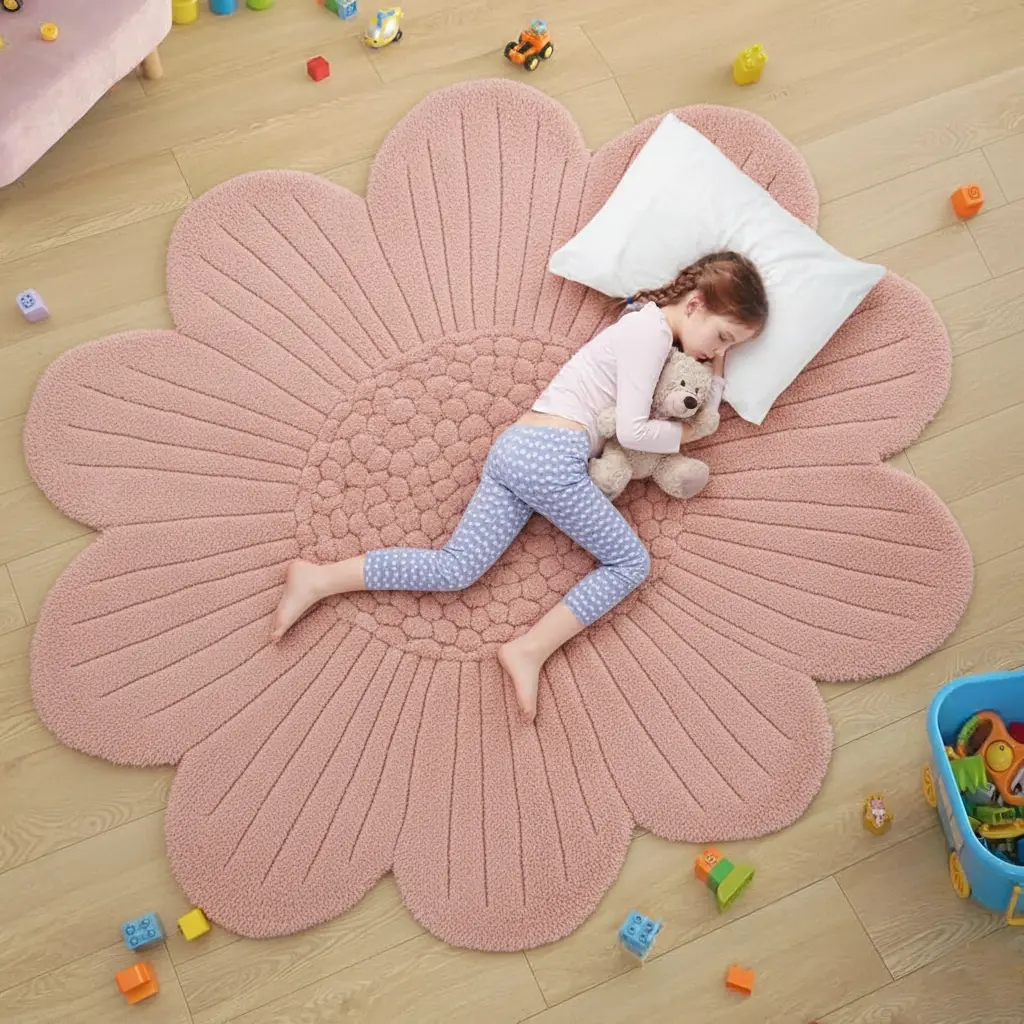
Buying a rug used to be simple.
Pick a color.
Choose a size.
Roll it out.
But today, many buyers discover something frustrating within weeks of bringing a rug home:
It looks fine…
but it doesn’t work.
Corners start curling.
The rug slides on hardwood.
Pet hair gets trapped deep inside.
Colors fade faster than expected.
For households with kids, pets, and daily foot traffic, this happens far more often than most people realize.
And it usually comes down to one decision made at checkout:
Store-bought rug… or hand-tufted rug.
The Problems Most Buyers Face (No Matter Where They Shop)
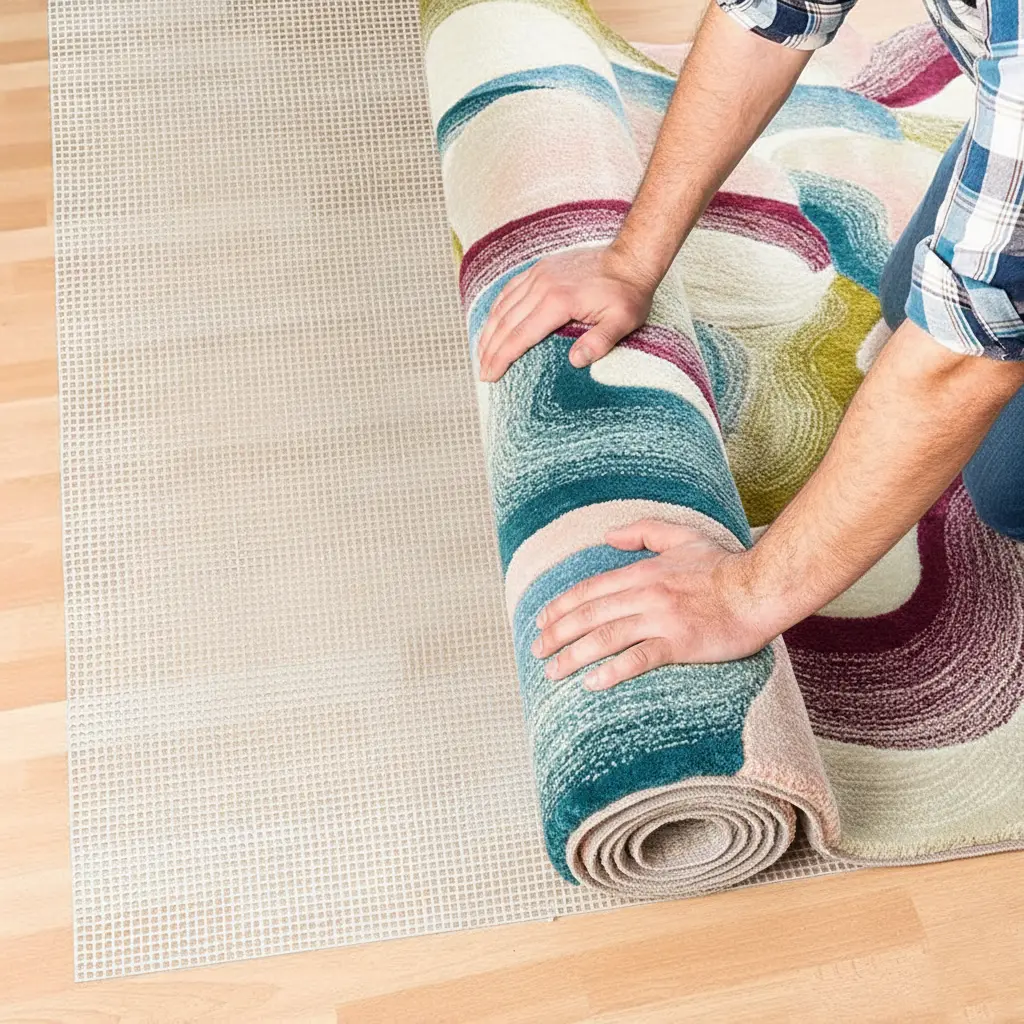
These issues aren’t rare. They’re common.
- Pet accidents that soak in and never fully release odors
- Curling corners that appear within the first month
- Slipping rugs that shift every time kids run across them
- Fading fibres after routine vacuuming
Many buyers assume:
“This is just how rugs are.”
It isn’t.
It’s how certain rugs are made.
Why Store-Bought Rugs Fail So Often
Store-bought rugs dominate the market for one main reason: cost efficiency.
They’re designed to:
- Be produced quickly
- Look good on shelves and photos
- Hit a price point
- Follow trends
What they’re not designed for is daily life in active homes.
Here’s why.
1️⃣ Materials: Built for Price, Not Performance
Most store-bought rugs rely on low-grade synthetic fibers.
At first, they feel soft.
But over time:
- Fibers flatten
- Odors get trapped
- Pet hair embeds permanently
- Moisture lingers
Once synthetic fibers absorb a spill or pet accident, cleaning becomes surface-level at best.
2️⃣ Backing: The Biggest Hidden Weakness
Flip over a typical store-bought rug and you’ll usually find:
- Thin latex
- Glue-based backing
- Minimal grip
This is why:
- Rugs slide on hardwood
- Corners lift and curl
- You constantly readjust placement
In homes with kids and pets, this isn’t just annoying—it’s unsafe.
3️⃣ Pile Height: Chosen for Looks, Not Living
Many store rugs go to extremes:
- Too high → traps dirt, hair, moisture
- Too low → rough feel, quick wear
Pile height is often chosen to look plush in-store, not to survive real usage.
What’s Different About Hand-Tufted Rugs
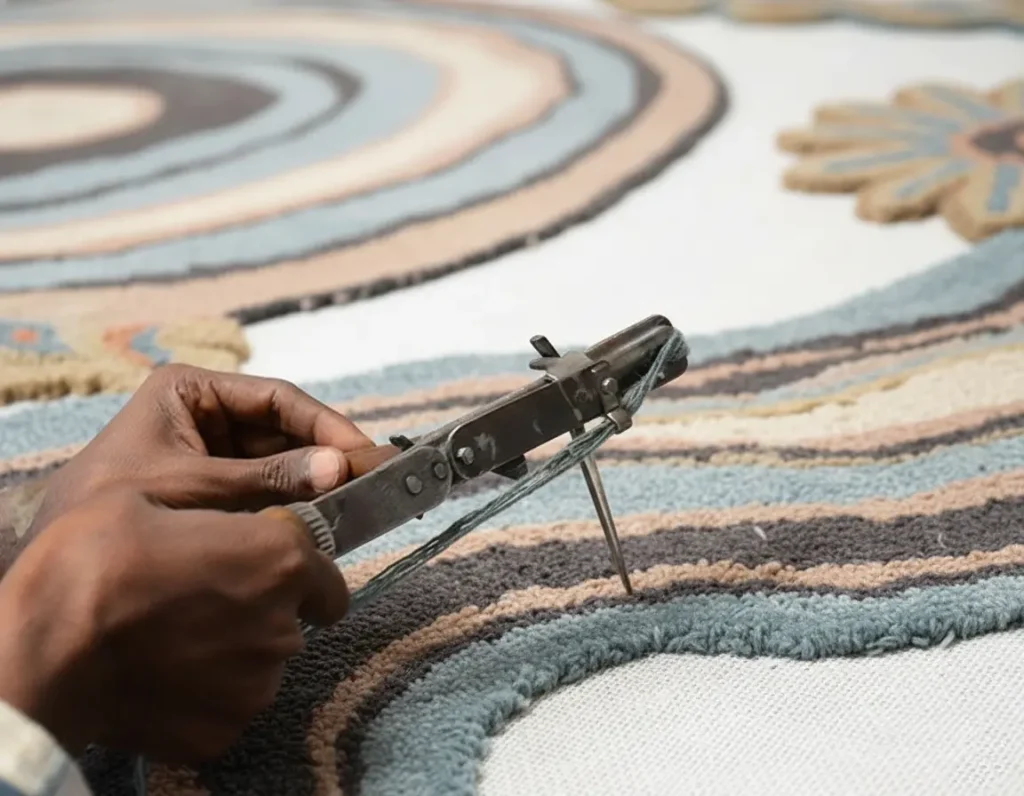
Hand-tufted rugs are built with a different philosophy.
They’re not mass-produced for turnover.
They’re constructed for use.
Here’s how that changes everything.
✔ Materials That Age Better
Hand-tufted rugs typically use higher-quality fibers that:
- Release odors more easily
- Don’t trap pet hair as deeply
- Hold structure under furniture
- Maintain texture with regular vacuuming
Instead of breaking down quickly, they settle in.
✔ Backing Designed to Stay Put
Backing in well-made hand-tufted rugs is treated as structural—not decorative.
The result:
- Better grip on hardwood floors
- Less curling at the edges
- More stability under movement
You place it once—and stop thinking about it.
✔ Balanced Pile Height
Hand-tufted rugs usually strike a middle ground:
- Comfortable for kids playing on the floor
- Easy to clean
- Resistant to matting
- Practical for pets
Not trendy.
Not exaggerated.
Just functional.
Store-Bought vs Hand-Tufted: A Simple Comparison
| Feature | Store-Bought Rugs | Hand-Tufted Rugs |
|---|---|---|
| Material Quality | Low–medium synthetic | Higher-grade fibers |
| Odor Retention | High | Low |
| Pet Hair Trapping | High | Moderate |
| Backing Stability | Weak | Strong |
| Curling Risk | Common | Rare |
| Longevity | Short-term | Long-term |
This isn’t about luxury versus budget.
It’s about fit for real homes.
What We Learned After Testing Rugs in Homes With Kids & Pets
After testing rugs in everyday households—homes with:
- Kids playing on the floor
- Pets sleeping in the same spot daily
- Hardwood and mixed flooring
- Regular cleaning routines
One thing became clear:
Most rug problems aren’t caused by users.
They’re caused by design shortcuts.
When rugs are made for appearance first, performance always suffers.
Designing Rugs for Real Life Instead of Showrooms
That insight led to a different approach.
Instead of asking:
“Will this sell fast?”
The question became:
“Will this still work after months of real use?”
That meant designing rugs specifically for:
- Homes with pets
- Active families
- Daily foot traffic
- Long-term ownership
This philosophy now guides rugs made under ikrugs.
Not trend-led.
Not disposable.
Just practical design.
What Buyers Notice After Switching
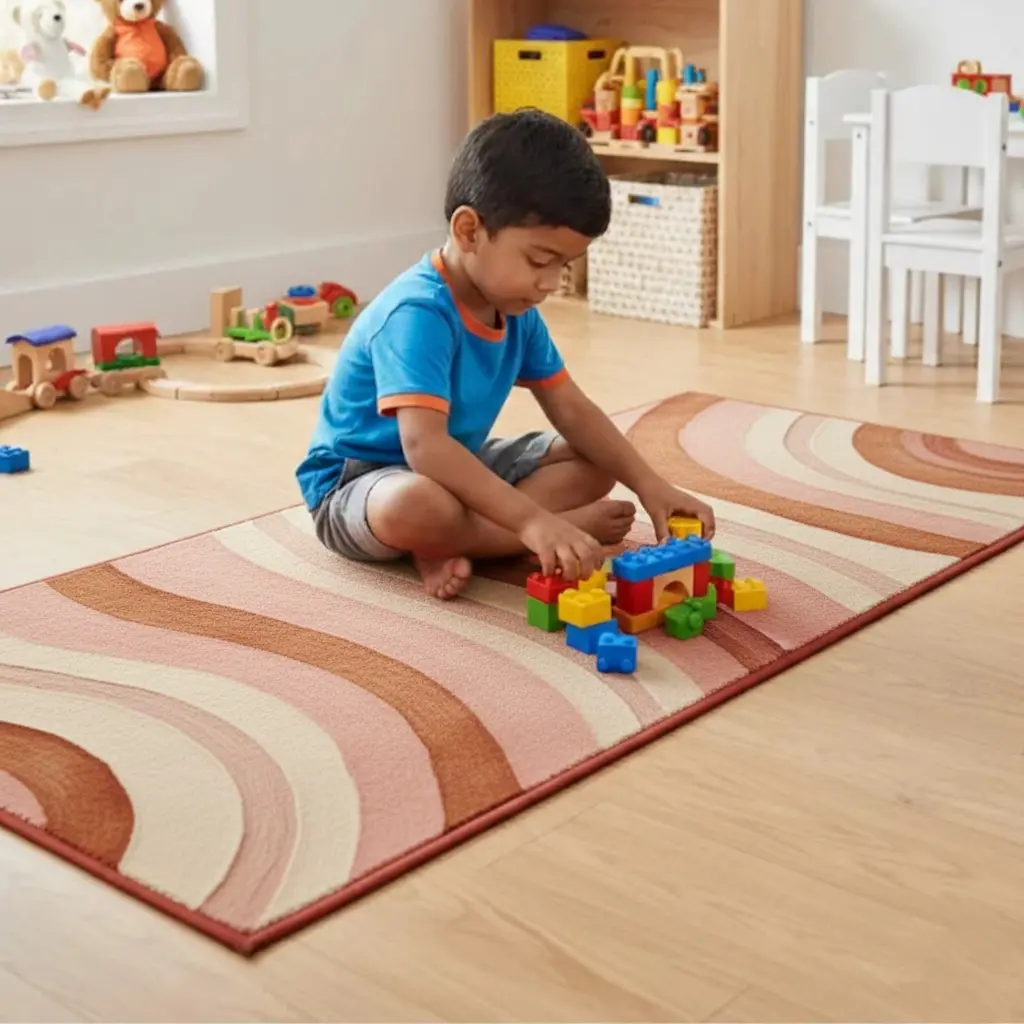
Buyers don’t usually describe the change as dramatic.
They describe it as… easier.
- The rug doesn’t move
- Cleaning feels manageable
- The floor becomes usable again
- The rug fades into daily life
Which, for most families, is exactly the point.
Choosing Between “Us” and “Them”
This isn’t about saying store-bought rugs are bad.
They work for:
- Low-traffic spaces
- Temporary setups
- Styling-focused rooms
But for homes with kids and pets, hand-tufted rugs consistently outperform.
They’re built for living—not just looking.
See the Rug That Solved All Four Problems
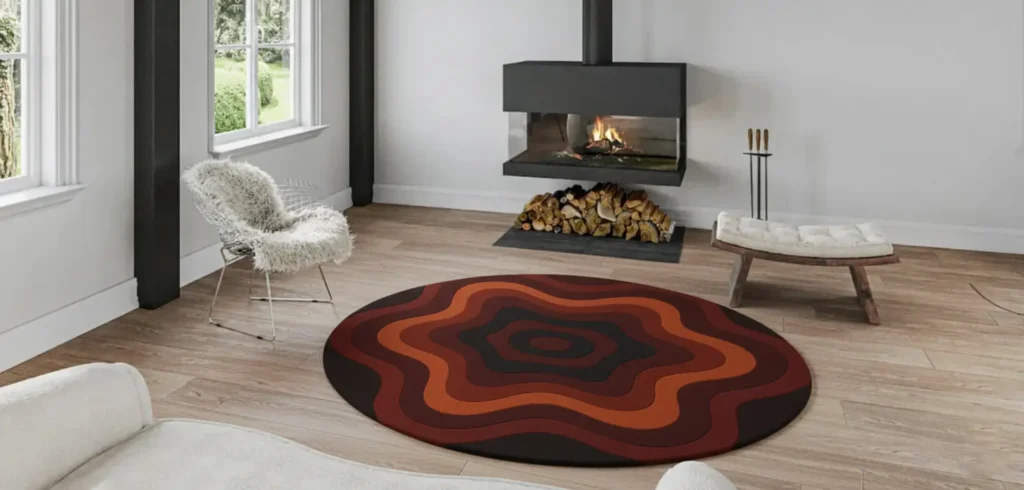
If you’re curious what a rug designed for real homes looks like, you can explore it here.
No pressure.
No hard selling.
Just a closer look at what actually works.